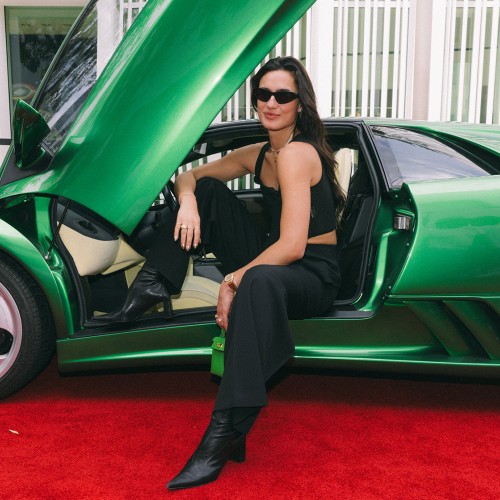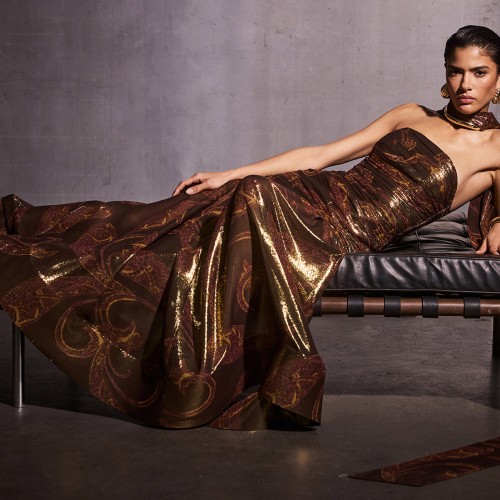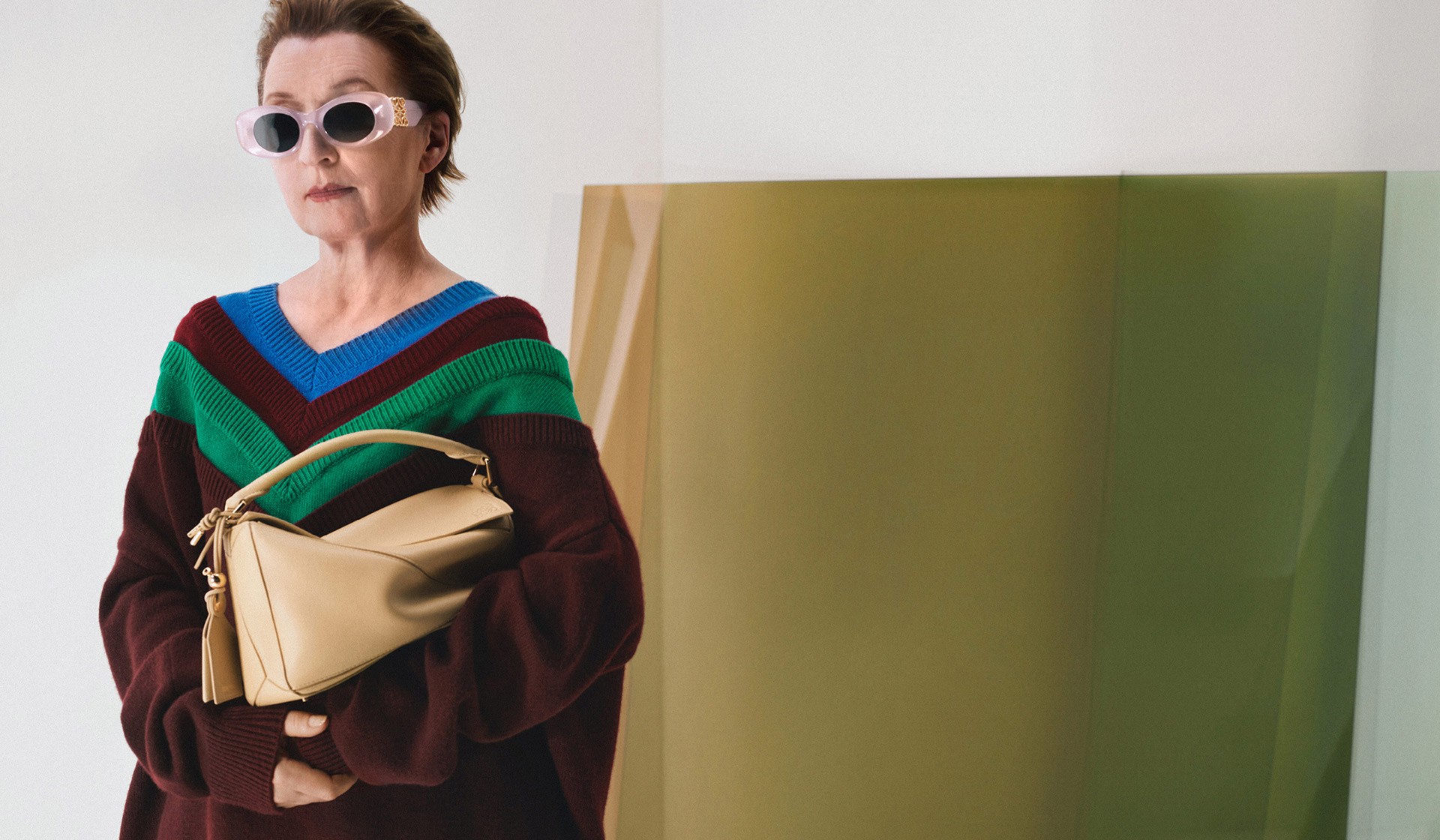
For LOEWE’s Fall/Winter 2025 collection, Jonathan Anderson didn't just design a collection. He built a collage.
Inspired by the randomness and rhythm of scrapbooks, Anderson approached this season's collection as a study in memory, craftsmanship, and experimentation. The result is a thoughtful mashup of shapes, textures, and silhouettes that feel both cerebral and playful.
The show, staged inside the 18th-century Hôtel de Maisons, unfolded across 17 rooms. Each space was curated like a gallery, mixing garments with pieces from the LOEWE art collection. Familiar objects from past collections reappeared, including sculptor Anthea Hamilton's giant pumpkin and Zizipho Poswa's towering ceramic vases. Oversized apples, floating acrobats, and mushroom-shaped stones filled the garden, grounding the show's surreal energy.
Throughout the lineup, garments challenge convention. Leather gets spliced, draped, and elongated into soft architectures that wrap around the body. Jersey dresses are sculpted into round forms. Familiar wardrobe staples like shirts, knits, and coats are fused together in blunt hybrids, turning the known into something new. A tiny ring becomes a top. Tricot stitches blow up to architectural proportions.
The flow between womenswear and menswear feels seamless, fusing everything into a cohesive whole. Slicing appears throughout the collection, inviting you to look inside the garment and experience fashion as something permeable rather than static. A Prince of Wales check liquefies into metallic fringes. Dresses made of beaded organza strands create the illusion of being see-through. Dense beading migrates from clothing to accessories and even the playful Toy mules, while the Ballet Runner 2.0's familiar pattern gets recreated in shearling.
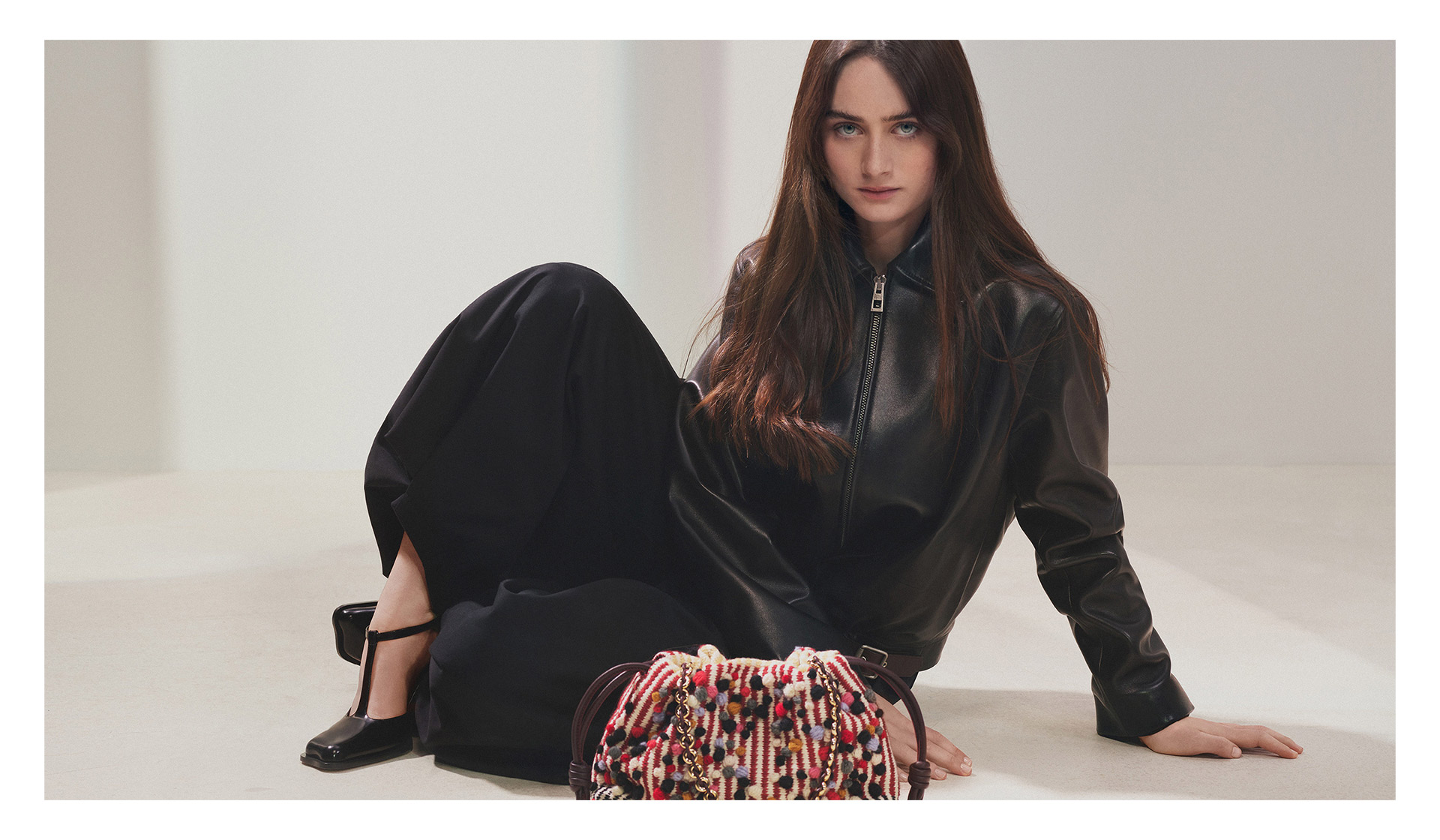
Anderson's main source of inspiration was the work of Josef and Anni Albers, pioneers of modernism whose art blurred the lines between form and function. The Bauhaus power couple, who met at the experimental school in 1922, shared an obsession with color theory and geometric abstraction that Anderson translated directly into fabric and leather.
Josef's "Homage to the Square" series, over 3,000 paintings exploring how adjacent colors affect perception, reimagines classic LOEWE bags like the Puzzle and Flamenco with bold color blocks. Specific works like "Precinct" (1951) and "Light Soft" (1968) find new life as three-dimensional accessories. Meanwhile, Anni's revolutionary textile work, including pieces like "South of the Border" and "Dotted" from the late 1950s, brings graphic punch to coats and accessories, adding dimension without relying on ornament.
The collection's experimental spirit feels especially poignant knowing this marks Anderson's final presentation for LOEWE. There is no single statement piece here, just fragments that form a larger meditation on what clothing can be when the rules are loosened.
Or maybe, as Anderson seems to suggest, when you let your mind wander a little and start cutting things up.